3 Silent Gaps Building Your Customer's Anxiety (And How to Avoid Them in 2026)
Dec 26, 2025
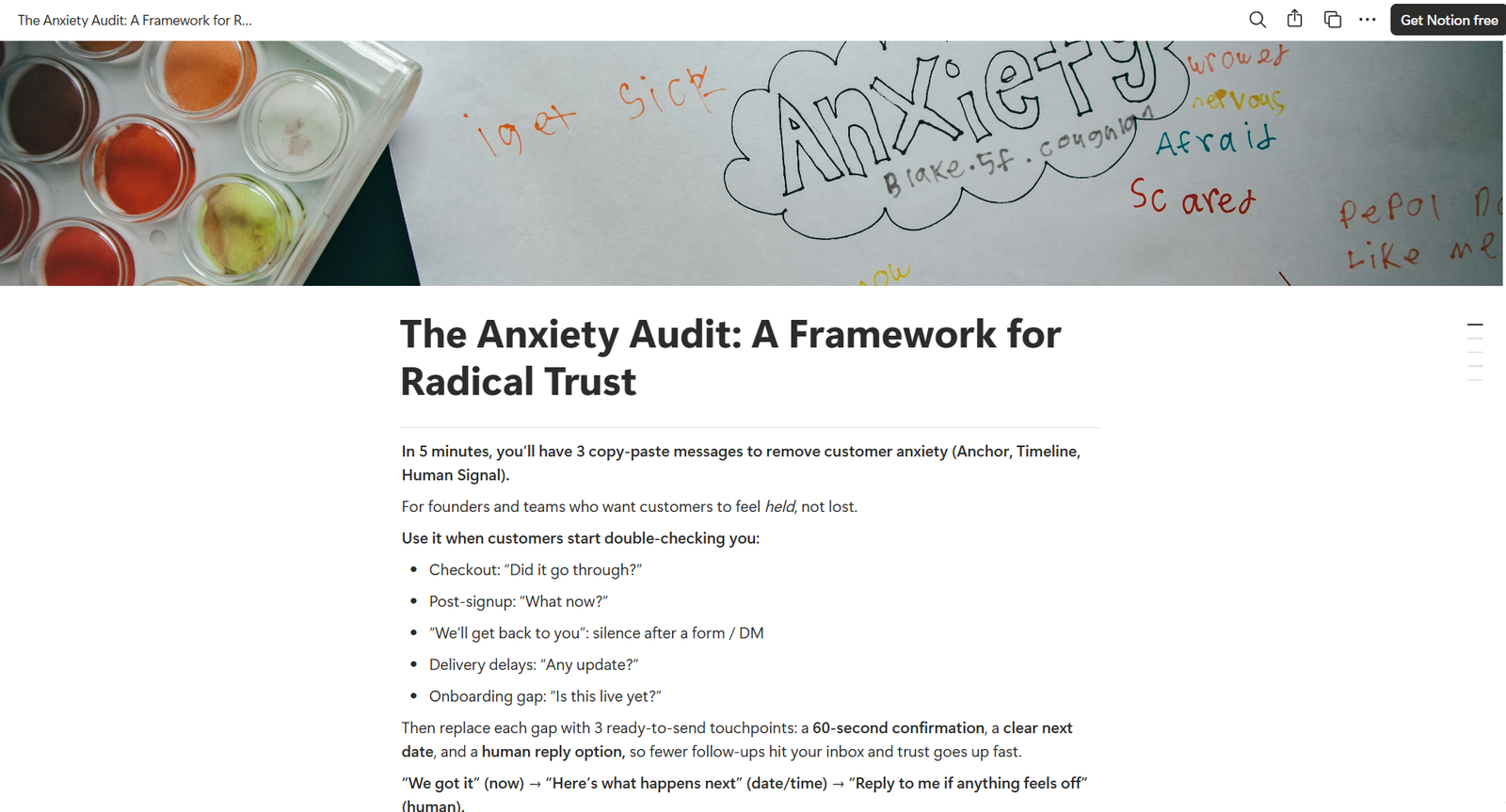
The first week of January is a trust stress test. While teams are still "optimizing for speed," customers are experiencing the Silent Gap: the anxious space between a transaction and a true human signal. If you don't audit these gaps now, you're not just losing efficiency; you're leaking revenue.
When a customer asks "Did it work?", they're not being difficult. They're reacting to silence.
Think of it like this: you place an order at a restaurant and the waiter disappears for 30 minutes. The food might be great, but the experience is already anxious. In business, silence does the same thing.
I built a simple Notion toolkit to stop guessing and start fixing the gaps that matter. Don't enter 2026 with a leaky trust system.
For any interaction you choose (payment, signup, booking, support, kickoff), install three touchpoints:
1) The Anchor (within 60 seconds)
If someone pays, submits, books, or signs up, do they get an immediate "We got it"?
Example gap: payment goes through → no confirmation → customer retries or emails.
Bad signal: "Maybe it failed. I'll try again." (duplicate orders + anxious follow-ups)
What you should do instead: confirm fast, clearly, and specifically.
Send this:
Payment received. Order #1032. We're on it. Next update by 3:00 PM today.
2) The Timeline (next touchpoint defined)
After the first confirmation, do you tell them exactly when they'll hear from you next?
Example gap: "We'll get back to you" → 48 hours pass → trust drops.
Bad signal: "They forgot me. I need to chase."
What you should do instead: set a date/time for the next update, even if the update is "still in progress."
Send this:
Next update: tomorrow (Fri) by 3:00 PM. If anything changes, you'll hear from us first.
3) The Human Reply Path (a real person)
Do you make it obvious a real person is reachable before things feel wrong?
Example gap: delay happens → customer discovers it first → frustration spike.
Bad signal: "No one is driving this."
What you should do instead: provide a clear reply path, and optionally a name or role.
Send this:
Reply to this message if anything feels off. A human will answer (not a bot).
Below is a good example of Anchor → Timeline → Human Reply Path
Anchor
Payment received. Order #1032. Next update in 60 minutes.
Timeline
We're packing it now. Shipping tomorrow (Friday) by 3pm.
Human Reply Path
Reply to this email if anything looks off. A human will answer.
Copy-paste sequences (choose your scenario)
These are starter templates. Use the same structure, then swap the nouns.
Mini rule: If there's 48+ hours of silence, add a proactive signal.
Notes
These are starter templates. Convert them to your workflow: e-commerce, SaaS, services, creators, support, education, healthcare, events, etc. If customers can wait, wonder, or follow up, this applies.
Tip for small teams: Your unfair advantage is the human factor. Big brands can automate updates. You can prove presence.
Start now: implement Anchor → Timeline → Human Reply Path, and remove anxiety from your customer journey.
Want the full toolkit? Duplicate it in Notion.
How the Toolkit Works
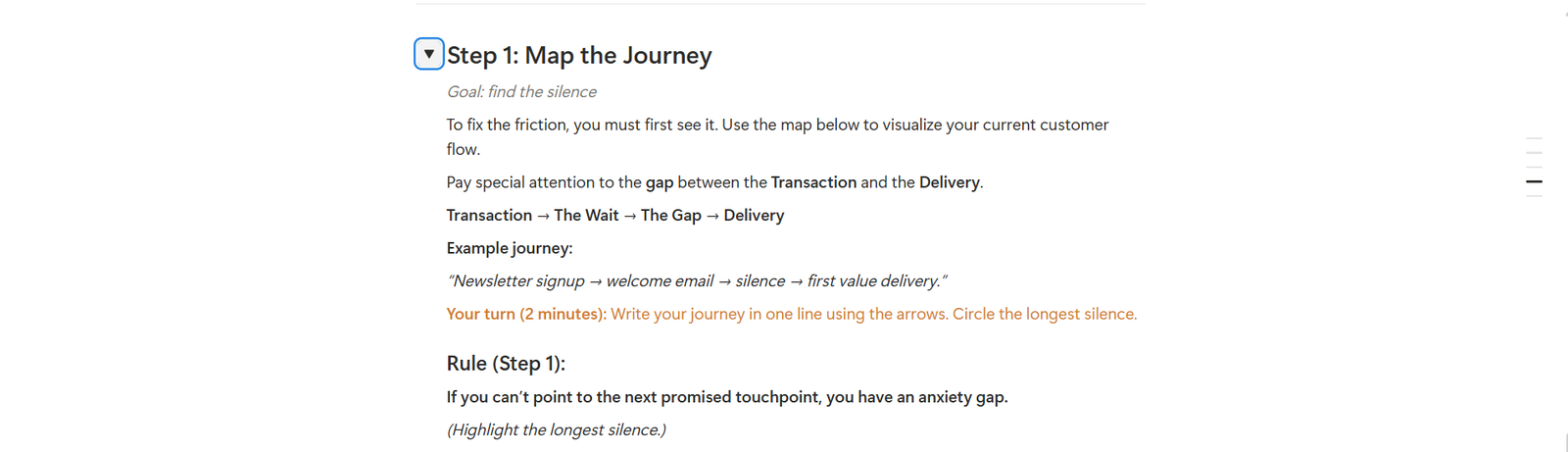
This is the grid.
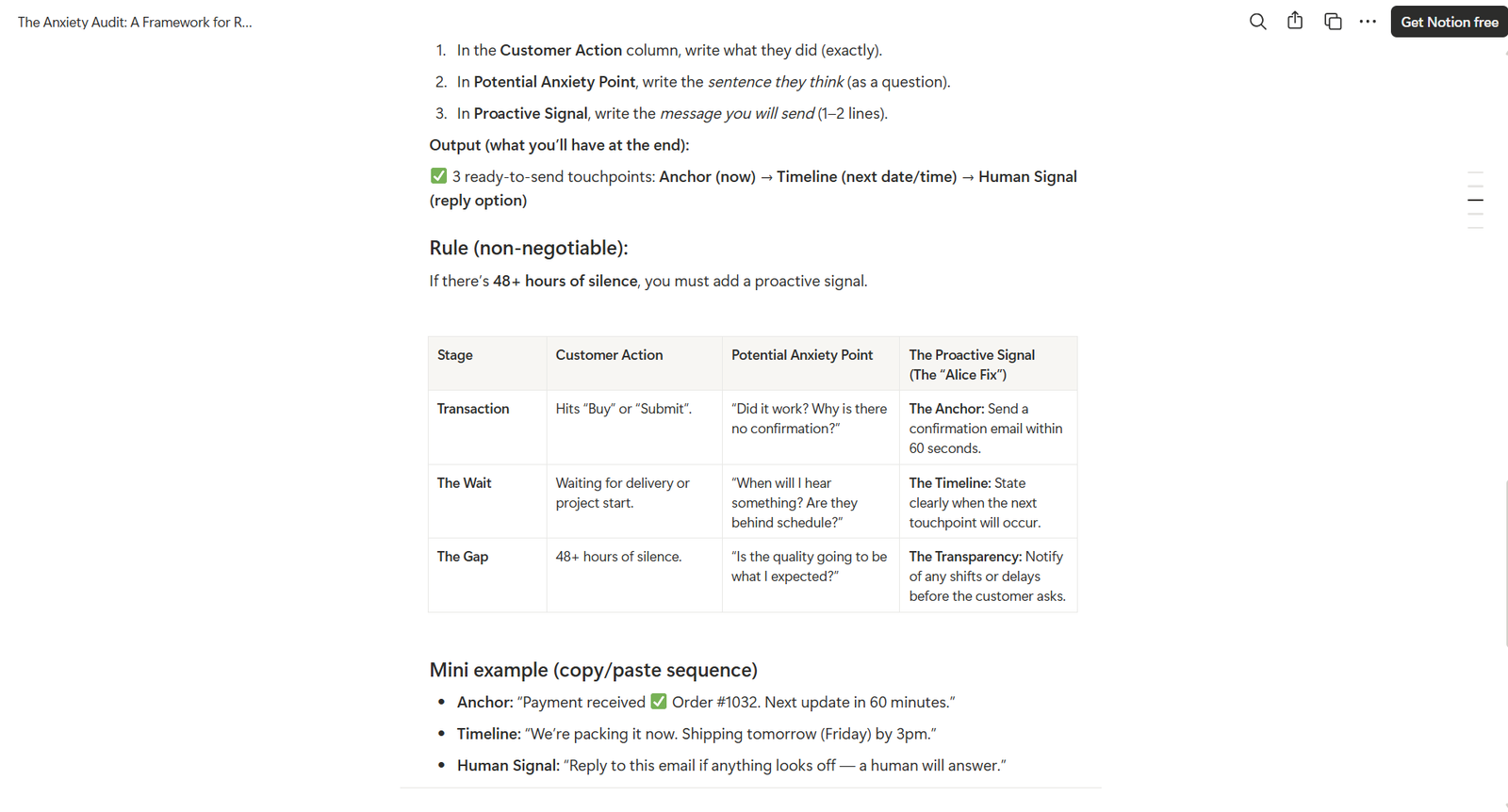
Here's how to write the anxiety sentence.
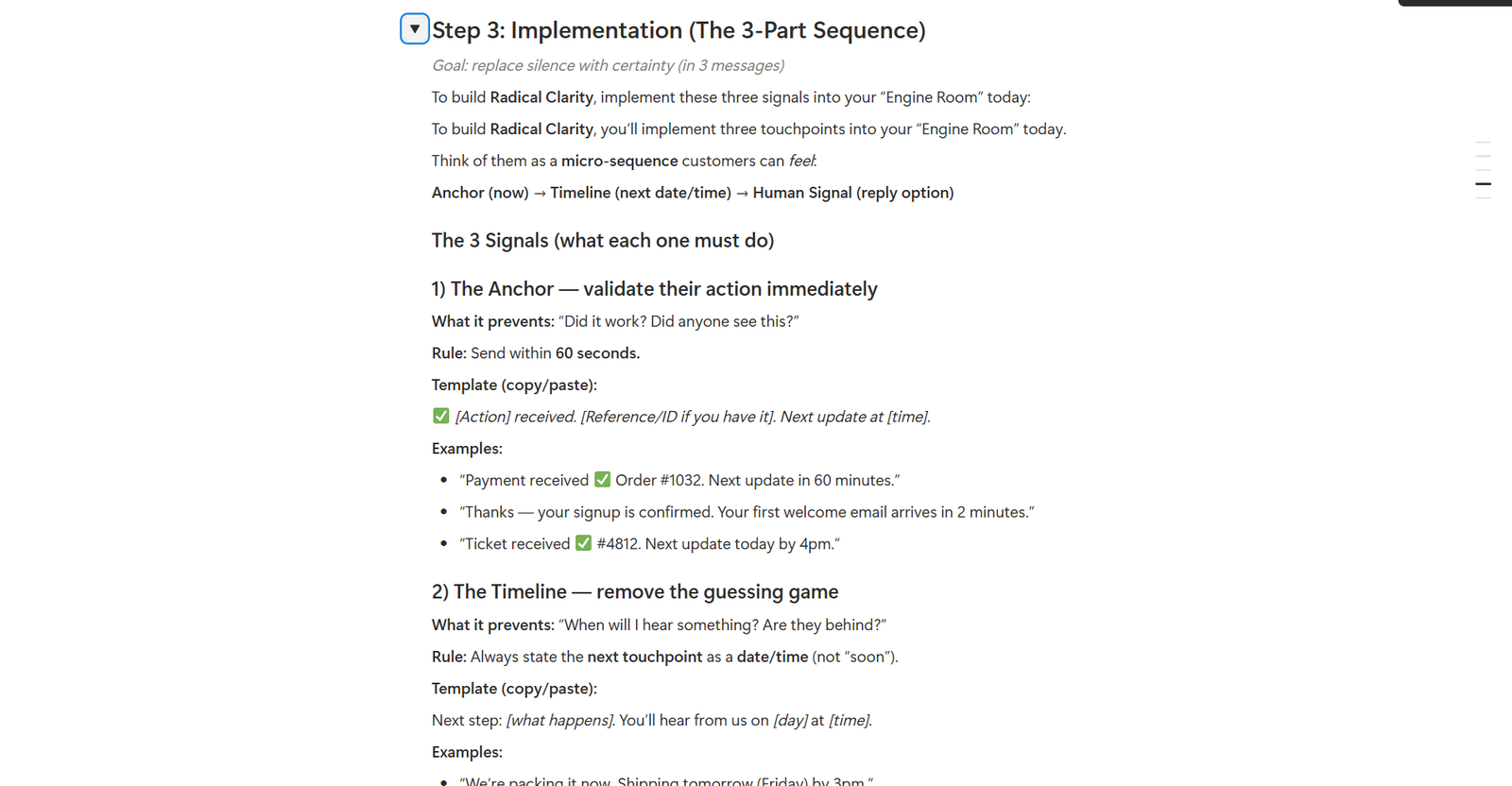
Here's the output: 3 copy/paste touchpoints.
Related Articles
AI Trust Zones Worksheet (Retail)
A one-page worksheet to map trust moments and define no-AI zones + escalation rules.
Read more →AI Trust Zones Worksheet (Retail)
A one-page worksheet to map trust moments and define no-AI zones + escalation rules.
Read more →From a Broken Football Dream to Building a Future: The Man Redefining Impact Without Showing Suffering
A profile of Issouf Safo Koné and AN KA SININASIGI, written with a deliberate craft line: the impact should not require humiliation. Includes a working framework for dignity-led storytelling in mission-driven communications.
Read more →Stay Updated
Get notified when I publish new reflections, insights, and behind-the-scenes updates.