The Labor of Loyalty: Why "Frictionless" is a Branding Lie
December 21, 2025

The Narrative Lab | Strategic Dispatch: Dubai (The Post-Rain Clarity)
I spent a rainy Saturday in IKEA Dubai Festival City, not as a shopper, but as a student of behavioral engineering. While most see a furniture store, I saw a masterclass in "Decisive Architecture" and the "Labor of Loyalty."
Here are my field notes on why the future of retail (and perhaps your own business) is unmistakably human.
Yesterday, while the rest of Dubai was drying out from a rare Saturday rain, I was standing in the IKEA restaurant queue observing a masterclass in strategic intent. We are often told that the gold standard of customer experience is a frictionless journey. We obsess over one-click checkouts and seamless funnels.
But IKEA (one of the most successful retail engines on the planet) proves that "frictionless" is often a branding lie. IKEA doesn't just sell furniture; they sell The Labor of Loyalty.
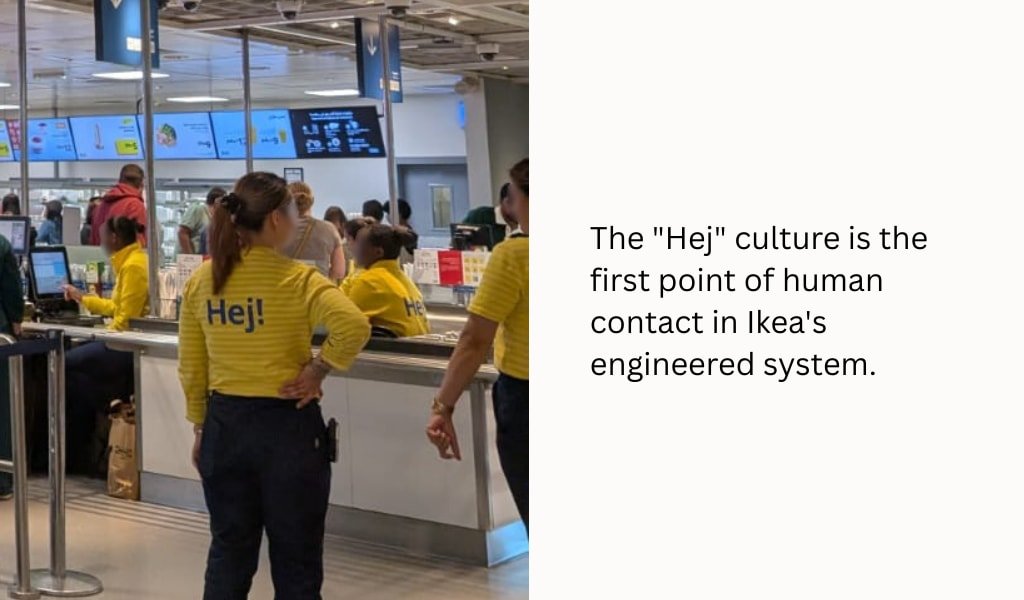
1. The IKEA Effect: Friction as a Retention Tool
In traditional marketing, we talk about making interactions "smooth." But IKEA forces you to walk their miles, find your own flat-pack boxes, and (crucially) assemble the product yourself.
The Psychological Twist: Behavioral economics terms this the "IKEA Effect"—the reality that we value things more when we put labor into them.
The Logic: If the client doesn't "build" something with you, they have no skin in the game. They will churn for a cheaper price the moment it is offered.
2. Biological Engineering: The Swedish Meatball as a Loss-Leader
We see the restaurant as a convenience; IKEA sees it as a Biological Reset Button.
The Strategy: A hungry customer is a logical, irritable customer.
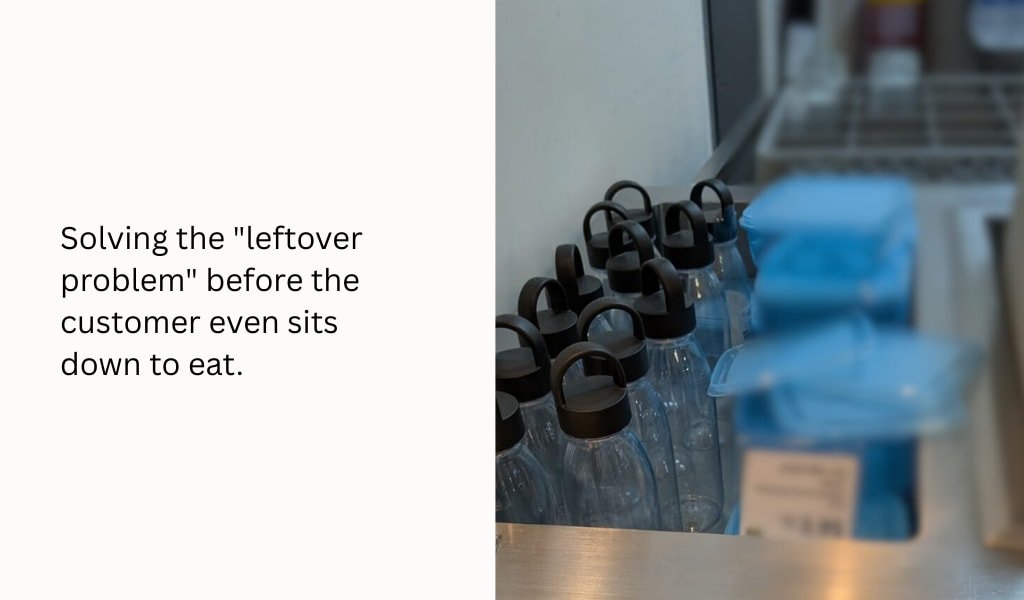
The Social Contract: By offering low-cost, high-protein food and positioning PRUTA takeaway containers right in the queue, IKEA resets your dopamine levels and your psychological baseline.
The Result: They provide a "Meatball" (a low-cost gift) and in exchange, you give them another two hours of your Saturday and a higher "mental budget" for impulse buys.
3. Decisive Architecture vs. Cognitive Load
The Labyrinth isn't just a path; it is Behavioral Guardrails designed for Cognitive Load Management.
The Mechanism: By removing the choice of "where to go next," IKEA frees your brain to focus entirely on the vision of the home.
The Critical View: You follow the arrows not just because they are clear, but because the architecture makes the alternative too complex.
The Lesson: Mapping the customer journey is about seeing the business from their perspective. Are your "guardrails" helping them reach a goal, or just making them easier for you to manage?
4. The Utility of Generosity: A Social Contract
The "Globally Local" 2025 initiative (specifically the collaboration with Emirati artist Muhra Al Muhairi) is a masterclass in Cultural Reconciliation.
The Diaspora Play: In a city of expats, IKEA provides a "Third Space" that belongs to no one and everyone.
The Trade: Providing free desks, power outlets, and charging stations is a strategic trade of electricity for hours of total Brand Immersion.
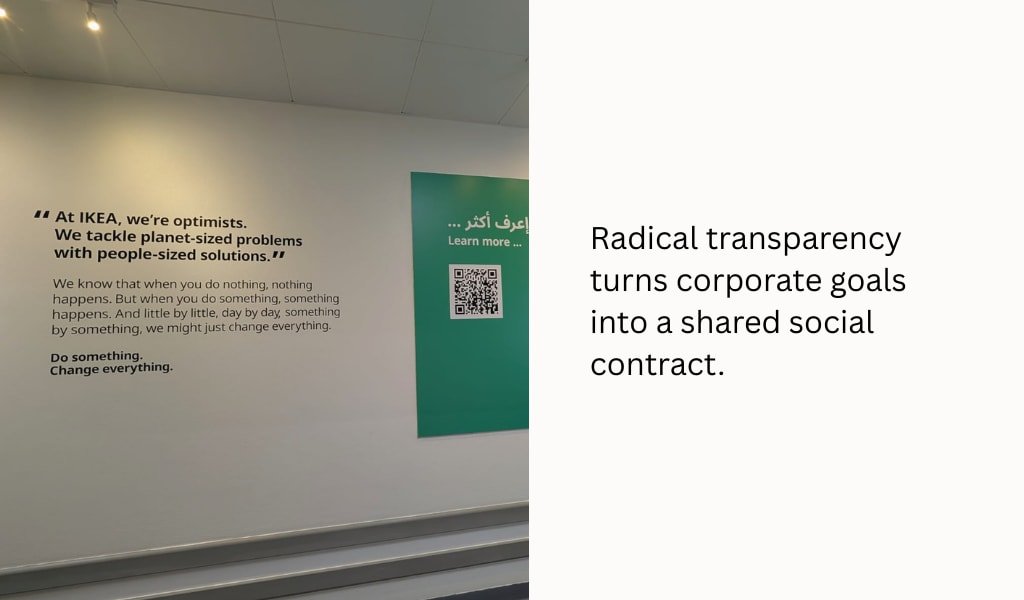
Radical Transparency: They don't hide their "Planet-sized problems"; they frame them as shared, actionable tasks: "People-sized solutions" on the walk to the elevator.
The Strategic Provocation
IKEA succeeds not because they make you feel at home, but because they make you work for your home.
Stop looking at your customer journey as a funnel designed to "trap" a lead. Start looking at it as an Architecture of Belonging that requires the customer to participate. The most loyal customers aren't the ones you did everything for; they are the ones who feel they built the result alongside you.
Related Articles
From a Broken Football Dream to Building a Future: The Man Redefining Impact Without Showing Suffering
A profile of Issouf Safo Koné and AN KA SININASIGI, written with a deliberate craft line: the impact should not require humiliation. Includes a working framework for dignity-led storytelling in mission-driven communications.
Read more →AI in Retail is Booming. Here's Where It Fails and Why Humans Still Matter.
AI is delivering speed—until refunds and disputes show up. Here's where it fails, and the human boundary retailers need.
Read more →Dubai just kicked off 2026's business calendar (literally). Here are the 10 business + tech events I'd bet on this year.
I'm writing this on 9 January 2026, and Dubai didn't ease into the year. The 1 Billion Followers Summit opened this morning—three days that basically turn the city into a live map of the creator economy.
Read more →Stay Updated
Get notified when I publish new reflections, insights, and behind-the-scenes updates.